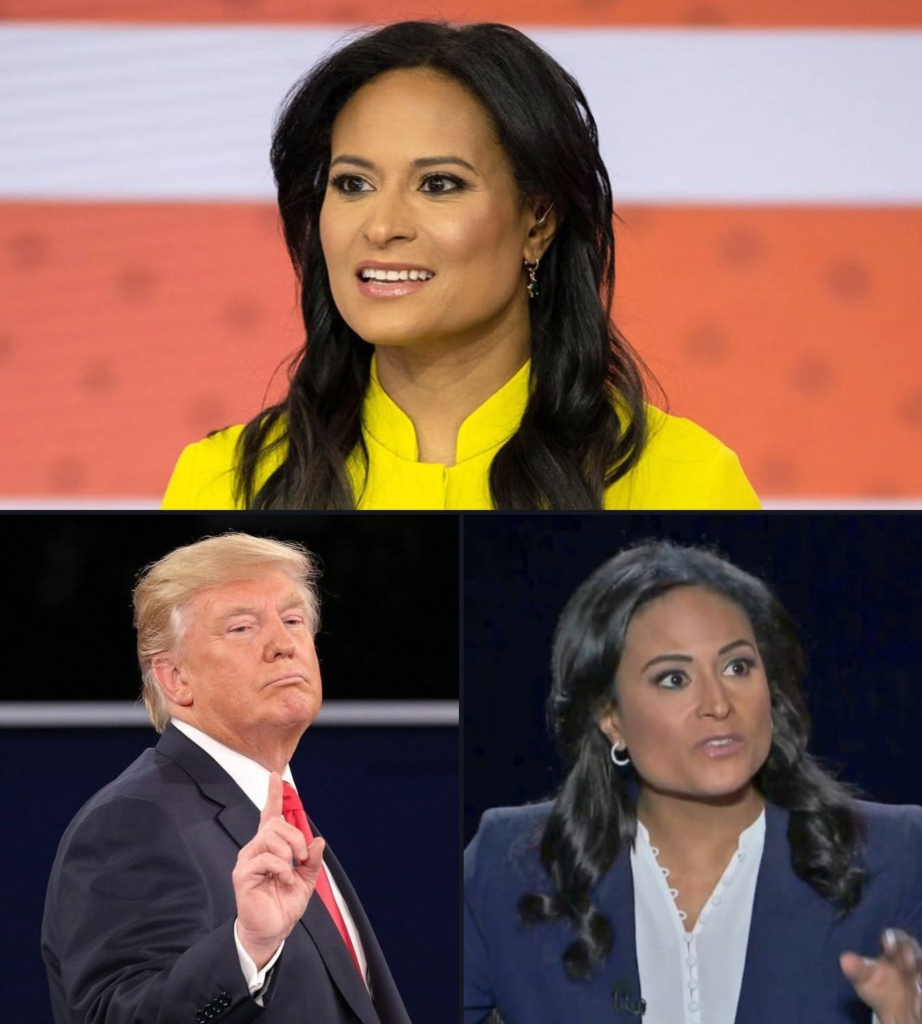
The Calm Before the Storm
Sunday mornings had long been a cornerstone of American political discourse, a space where seasoned journalists dissected policy, debated legislation, and held leaders accountable. “Meet the Press,” a network flagship, had cultivated that reputation for decades, balancing rigorous questioning with measured professionalism. Kristen Welker, heralded for her incisive reporting and calm demeanor, had been seen as a standard-bearer of this tradition.
But on a fateful broadcast, the equilibrium shattered. The studio, usually a sanctuary of orderly exchanges, felt charged in a way unseen in recent memory. Cameras rolled. Microphones hummed. The president was poised to address a series of pressing questions. And yet, beneath the polished exterior of the set, tension hung thick, palpable, like a storm ready to break.
Inside the control room, producers whispered anxiously. They sensed the approaching collision of raw emotion and live television. For weeks, public scrutiny had intensified, and both sides—the press and the executive branch—were bracing for confrontation.
No one anticipated how sharply events would pivot. One carefully phrased question, a measured follow-up, and a piercing gaze would become the trigger that set off a sequence of events culminating in a suspension that stunned millions. The calm, the structure, the scripted narrative—it all vanished in an instant.
The Moment That Changed Everything
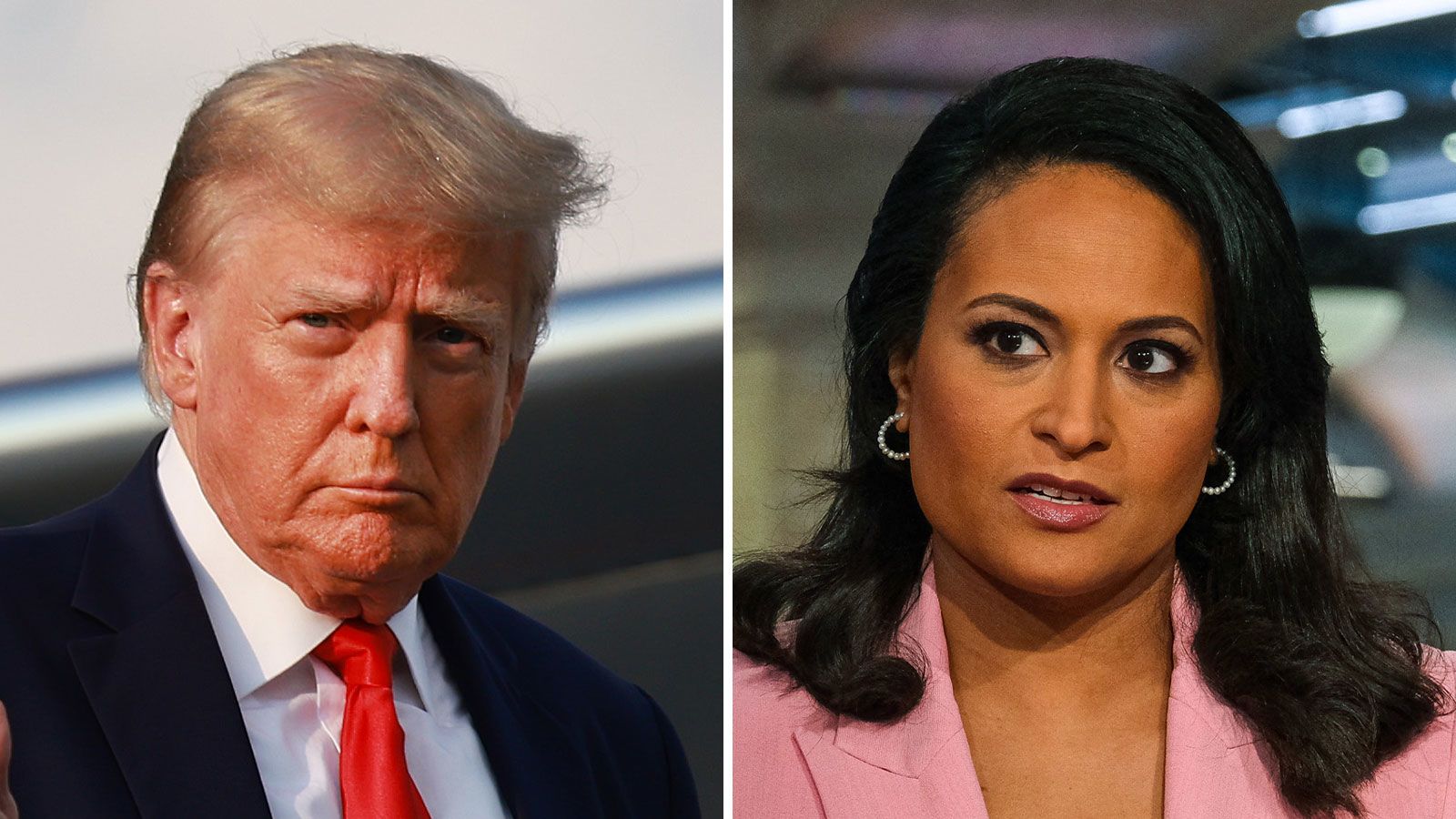
Kristen Welker leaned forward, her eyes locking on the president with unwavering intensity. Her voice, clear and unyielding, cut through the air as she pressed for clarity on contentious topics. Questions about policy missteps, administration misstatements, and previous claims hung in the balance.
The president, unprepared for the pointed precision and persistent follow-ups, began to shift uncomfortably. Viewers at home felt the tension spike, as each rebuttal was met with an insistence that blurred the line between professional inquiry and personal confrontation. It was as though decades of decorum had suddenly been replaced by a live, unfiltered political battlefield.
In that moment, Welker’s composure teetered on a knife-edge. Her questions, incisive and relentless, demanded attention. Her voice rose, not in anger, but in the controlled intensity of a journalist who refuses to allow obfuscation. Each phrase reverberated across the studio, carrying a weight that had the entire production team holding its breath.
The exchange, seconds in real time but hours in perception, crystallized the essence of accountability in broadcast journalism: the obligation to pursue truth, no matter the personal cost, the potential backlash, or the precariousness of live television. The tension was electric, leaving no room for misinterpretation.
An Audience Caught Between Shock and Awe
Viewers across the nation watched as the exchange escalated. Social media feeds erupted with live commentary. Analysts debated whether Welker’s tone was a courageous stand or an overstep. Within seconds, clips of the confrontation began circulating online, provoking thousands of comments, shares, and heated arguments.
Inside the studio, the energy had shifted entirely. Camera operators felt the change in rhythm; producers flinched at each rapid-fire response. What had begun as a standard interview now resembled a gladiatorial arena, a test of stamina, poise, and public perception.
The audience’s reactions mirrored the chaos unfolding on set. Gasps, murmurs, and stunned silences punctuated the viewing experience. For many, this was a historic moment in political media: a journalist’s refusal to relent under direct pressure from the highest office in the land.
Yet admiration was intermingled with apprehension. Some viewers questioned whether this confrontation adhered to traditional standards of broadcast civility, while others celebrated the boldness of a reporter prioritizing truth over decorum. The moment became a lightning rod for national discourse before it had even concluded.
The Unraveling On-Air
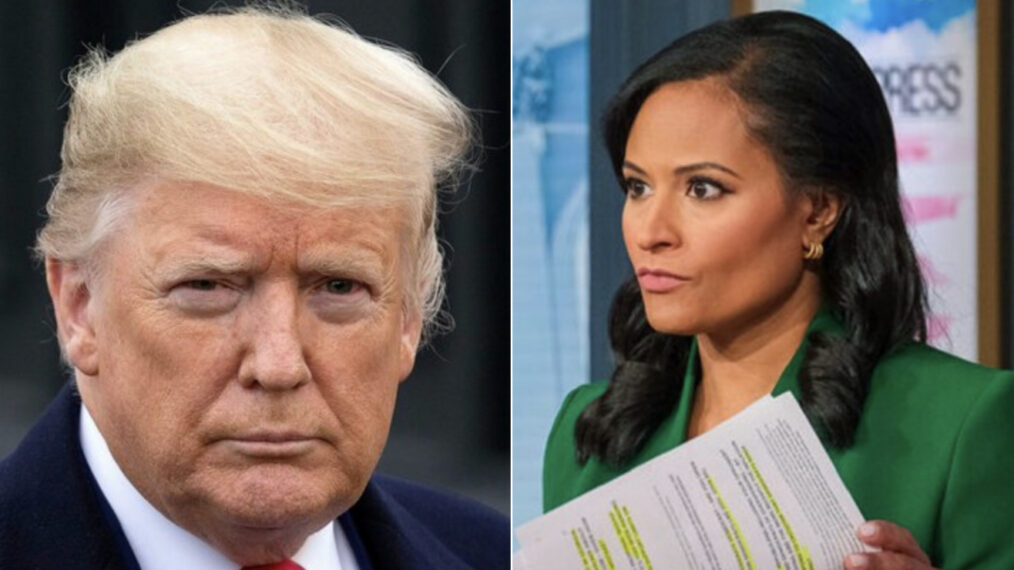
As the exchange intensified, Welker’s composure frayed, though never entirely. Her questions sharpened, her voice rising incrementally, forcing clarity from the president on multiple fronts. The lines between professional inquiry and perceived aggression blurred.
NBC executives, watching from monitoring stations, realized the broadcast was no longer controllable. Every live cut, every angle, every microphone feed amplified the sense of confrontation. The president, visibly irritated, began interrupting, attempting to regain narrative dominance, while Welker maintained her focus, her gaze steady, her voice unwavering.
The physicality of live television—the proximity of cameras, the timing of cutaways, the immediacy of audience reactions—magnified the intensity. It was a perfect storm: policy, personality, and the pressure of immediacy collided in a volatile mix that neither party could fully contain.
For those in the control room, the question was not whether this was newsworthy—it was whether the network could survive the repercussions. Every moment risked going viral, potentially reshaping perceptions of professionalism, journalistic integrity, and the relationship between the press and the executive branch.
The Aftermath: NBC Responds
Hours after the broadcast concluded, NBC released a statement confirming Welker’s suspension. Sources described intense discussions behind closed doors. Talent Director Joe Barron reportedly expressed frustration, citing “improvised behavior” and “inadequate management of live responses.”
The suspension was presented as a precautionary measure, with the network indicating that it would review the exchange to assess the appropriate disciplinary response. Insiders suggested that the decision was influenced by both internal and external pressures, including political scrutiny and public backlash.
Welker’s suspension ignited a firestorm online. Commentators debated freedom of the press, journalistic courage, and the boundaries of decorum. Critics argued she had crossed a line; supporters argued she had done precisely what the public expects of a tenacious journalist.
NBC faced a dual crisis: defending its programming and maintaining credibility while managing the reputational risk of suspending one of its most prominent anchors. The situation exposed the precarious balance between editorial independence and corporate oversight in high-stakes political journalism.

Public Reaction and Media Frenzy
Across social media platforms, the debate raged. Clips of Welker’s pointed questions and the president’s reactions were dissected repeatedly. Hashtags calling for her reinstatement competed with hashtags demanding accountability. Analysts and political commentators flooded the conversation with opinions, creating a maelstrom of conflicting narratives.
For viewers, the incident became more than a single broadcast—it was a lens into the pressures journalists face under direct political scrutiny. Many cited it as a defining moment in live reporting, demonstrating the challenge of balancing incisive questioning with professional restraint.
Public opinion polls conducted in the aftermath revealed a nation deeply divided. While a portion of the audience applauded Welker’s courage, another viewed the incident as reckless, highlighting the fragile relationship between media and public trust.
In essence, the broadcast catalyzed a nationwide conversation about the role of journalism in holding power accountable while navigating the dangers of live, unfiltered interaction with high-profile political figures.
Welker’s Career on the Line
The suspension raised immediate questions about the future trajectory of Welker’s career. Colleagues, insiders, and industry observers speculated whether this was a temporary disciplinary action or a permanent setback.
The anchor’s reputation, built over years of measured reporting and credible interviews, now faced scrutiny. Industry analysts debated whether network executives had made a decision to protect broader corporate interests, fearing political retaliation or loss of advertisers.
For Welker, the incident may redefine her public image. Will she be remembered as a journalist who stood her ground under pressure, or as one who allowed emotion to dictate professional conduct? The answer remains uncertain, and it hinges on both public perception and network decisions in the weeks to come.
Regardless, the episode highlighted the immense pressure faced by live broadcasters who confront controversial topics in real time.
Implications for Journalism
Beyond the personal ramifications, the incident sparked wider discussions about the evolving landscape of political journalism. The tension between accountability and decorum, between aggressive questioning and professional restraint, has become increasingly salient in a media environment dominated by immediacy and virality.
This case illustrated the ethical and strategic challenges journalists encounter when confronting powerful figures on live television. It also underscored the necessity of training, editorial support, and real-time decision-making protocols to navigate high-stakes interactions.
For journalism schools, media think tanks, and press watchdogs, the event has become a case study: the risks of live confrontation, the unpredictability of human behavior under pressure, and the role of networks in balancing journalistic integrity with corporate risk management.
The National Conversation
The suspension of Kristen Welker is now part of a broader national discourse about press freedom, executive accountability, and the expectations of viewers in an era of polarized politics. Every clip, comment, and news analysis adds layers to the narrative.
Observers note that moments like this shape public understanding of the relationship between media and power. They force citizens to consider the limits of questioning authority, the responsibilities of journalists, and the stakes involved in challenging established narratives.
In the weeks and months ahead, the Welker incident will likely be referenced in discussions about the boundaries of professional conduct, the ethics of live broadcasting, and the influence of social media amplification on real-time news events.
A Lingering Echo
Though the broadcast ended and the suspension was announced, the ripples continue to spread. Viewers, journalists, and political analysts revisit the moments repeatedly, dissecting body language, tone, and phrasing.
The story leaves open questions about accountability: who determines when a journalist has crossed a line? How much pressure can a broadcaster endure before it compromises the integrity of reporting? What role does public reaction play in corporate decisions affecting media careers?
Ultimately, the incident is a reminder of the precarious nature of live journalism, the power of immediacy, and the enduring responsibility of journalists to balance truth-telling with professional restraint. The room may have gone silent in the studio, but the conversation it sparked continues to resonate across the nation.