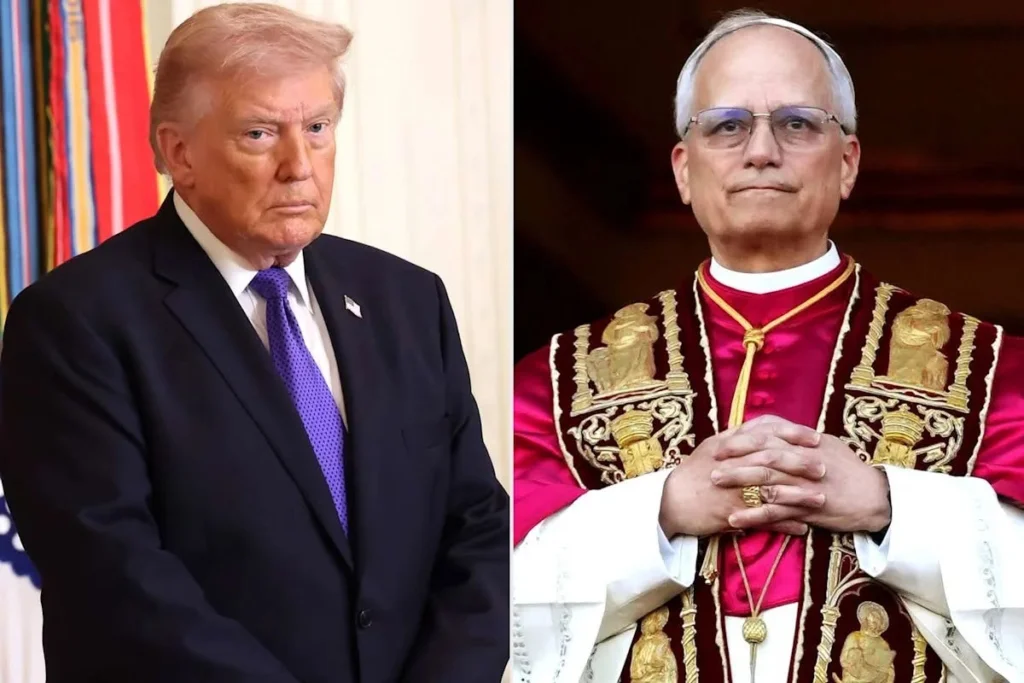
THE MOMENT WHEN CONTROL BECOMES VISIBLE
Behind every formal gathering is an invisible structure of management—producers of tone, moderators of timing, architects of flow. But in moments where speech diverges from expectation, that structure becomes briefly visible.
A pause too long. A breath held slightly differently. A shift in posture that suggests recalibration rather than comfort.
Pope Leo XIV continued without breaking rhythm, which only intensified the perception that the room itself was adjusting around him rather than the other way around.
Control, in these environments, is rarely about dominance. It is about consistency. And consistency, once established, can feel indistinguishable from certainty.
The audience did not interrupt. But they also did not relax.
WHEN INTERPRETATION BECOMES THE SECOND SPEAKER IN THE ROOM
As the fictional speech developed, something subtle happened: the audience began to form a parallel version of the event in their own minds. One version existed in real time. The other existed in interpretation.
This is where modern narrative environments become complex. No single statement remains singular. It branches. It multiplies. It evolves faster than it can be corrected or confirmed.
Within this fictional reconstruction, Pope Leo XIV becomes less a speaker and more a catalyst for interpretive expansion. Each listener constructs a slightly different version of meaning based on expectation, belief, and prior context.
The result is not confusion. It is layering. And layering creates depth, but also instability.
Because once interpretation begins speaking alongside speech, the original voice is no longer alone.

WHEN FEAR IS NOT SHOUTED, BUT IMPLIED
The most powerful tension in the room was not visible confrontation. It was implication. The sense that certain ideas, once introduced, cannot easily be contained again within neutral language.
In this fictional narrative, the tone attributed to Pope Leo XIV carried a sense of inevitability rather than urgency. Not that something was happening immediately—but that patterns, once set in motion, tend to complete themselves.
This kind of framing does not require volume. It requires structure. And structure, when perceived as warning, changes how every subsequent sentence is received.
Even silence begins to feel meaningful.
Even pauses begin to feel intentional.
WHEN A MOMENT LEAVES THE ROOM BUT DOES NOT LEAVE MEMORY
Eventually, as all structured events do, the moment transitions. The cameras remain steady. The audience does not erupt. There is no collapse, no disruption, no visible rupture in the physical world of the event.
But something has already shifted in how the moment will be remembered.
Pope Leo XIV remains within the narrative not as a conclusion, but as a point of reflection—a figure through which questions about authority, interpretation, and perception continue to circulate long after the speech itself has ended.
Because in modern narrative environments, the end of a moment is never the end of its meaning.
It is only the beginning of its retelling.
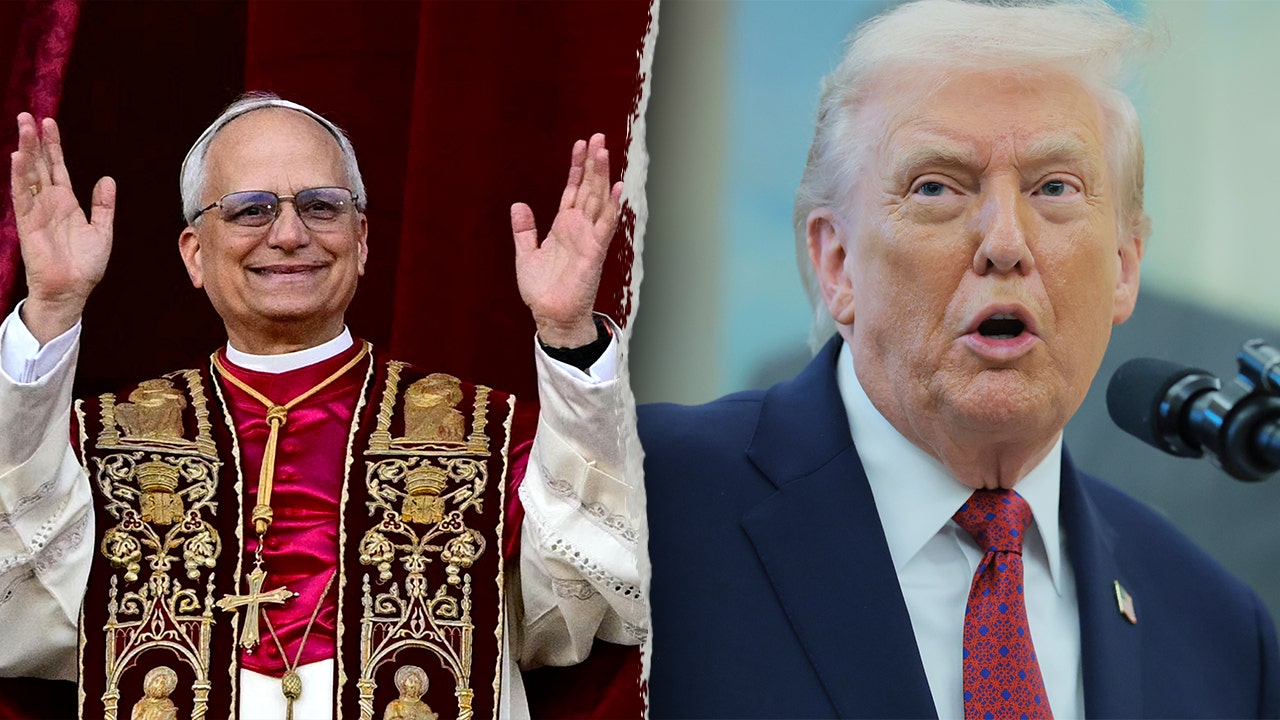
A FINAL SILENCE THAT CONTINUES AFTER THE WORDS STOP
When everything is over, the room does not feel dramatic. It feels normal again. People stand. Chairs shift. Conversations resume at lower intensity. The machinery of public life returns to its expected rhythm.
But beneath that surface, something remains unsettled—not because anything was proven, but because something was suggested and never fully closed.
Pope Leo XIV leaves the stage as he arrived: without excess motion, without spectacle, without transformation of tone. And yet the space he leaves behind feels slightly altered, as if interpretation itself has been expanded.
In the end, what lingers is not certainty, but resonance.
And resonance, unlike speech, does not end when the speaker stops talking.
