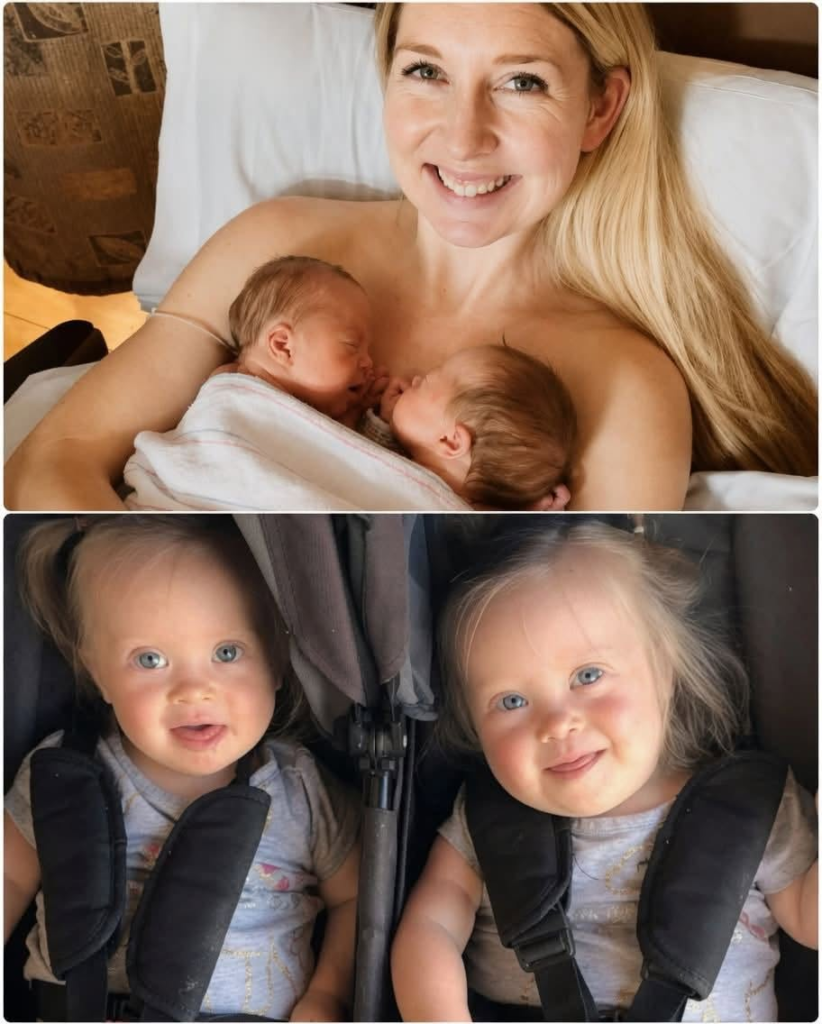
The room was quiet in a way that no expectant mother ever forgets.
There are certain moments in life when a few simple words can divide time into two separate worlds: the life you imagined before hearing them, and the life you must learn to embrace afterward.
For one mother in 2018, that moment came during a routine medical appointment. She walked into the examination room filled with the same emotions countless parents experience while waiting to meet their unborn child — excitement, nervousness, curiosity, and hope.
She was 39 years old.
She was carrying twins.
She had already begun imagining their future.
The little hands she would hold.
The first steps.
The birthdays.
The ordinary, beautiful moments that parents quietly dream about long before their children arrive.
But then the doctors looked at her and delivered news that changed the conversation completely.
Her identical twin daughters had been diagnosed with Down syndrome, a genetic condition caused by an extra copy of chromosome 21.
The medical information was presented carefully. The doctors explained possible complications. They discussed the challenges that could come. They talked about potential health concerns.
But what this mother remembers most was not the diagnosis itself.
It was the feeling in the room.
The expressions on the faces around her.
The heavy silence.
The way people looked at her as if they were already preparing her for a tragedy.
As if the children she carried were something to mourn.
As if happiness was no longer possible.
And that was the part she struggled to understand
Because she wasn’t grieving.
She was waiting for her daughters.
She wasn’t mourning a loss.
She was preparing to welcome two lives.
Two members of her family who were already loved before they ever opened their eyes.
But the world around her seemed to expect a different reaction.
Six different times, doctors brought up the possibility of ending the pregnancy.
Six different conversations.
Six different moments where she was reminded that another choice existed.

Each discussion was presented professionally. The doctors were doing what they believed was part of their responsibility — explaining options and preparing the parents for what might come.
But to this mother, each conversation carried a painful message.
That somehow the lives growing inside her were being measured by what they might struggle with instead of who they already were.
She never forgot the moment when someone even offered condolences before her daughters were born.
Condolences.
As if someone had died.
But no one had died.
Two little girls were still growing.
Two hearts were still beating.
Two futures were still waiting.
And their mother already knew something that others had not yet understood.
Her daughters were not a diagnosis.
They were not a medical statistic.
They were not a tragedy waiting to happen.
They were her children.
Beside her throughout those difficult conversations was her husband, Cody.
Like any parent, he had dreams for the future. He was young, ambitious, and working toward becoming a pilot. He had plans. Goals. A vision of where life might take their family.
But in that moment, all those plans became secondary.
Because the most important decision was not about careers, finances, or convenience.
It was about two tiny lives.
Together, they made their choice.
They would welcome their daughters.
No matter what.
They knew there could be challenges.
Doctors had discovered that one of the twins had heart problems. There would likely be surgeries. There would be hospital visits. There would be moments of fear and uncertainty.
Parenthood always comes with uncertainty.
But they decided that fear would not be the first thing their daughters experienced.
Love would.
When Charlotte and Annette were born in 2018, the world suddenly became much smaller.
The medical conversations.
The predictions.
The worries.
All of it faded into the background.
Because in their mother’s arms were not statistics.
They were babies.
Tiny fingers.
Soft cries.
Warm faces.
Two daughters who had finally arrived.
The birth itself was calm.
There was no dramatic emergency.
No devastating ending.
Instead, there were two newborn girls entering the world exactly as they were meant to.
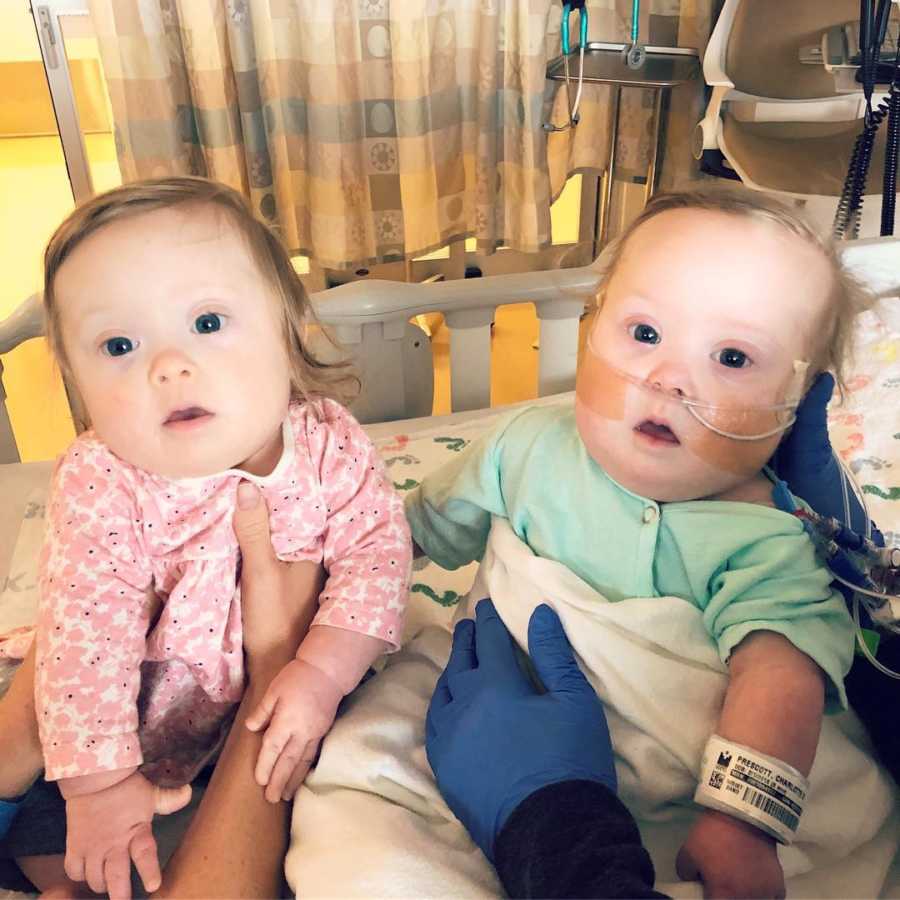
For doctors, their arrival represented something extraordinarily rare.
Identical twins with Down syndrome are extremely uncommon. Their case immediately attracted attention because of how unusual it was medically.
But for their parents, the rarity was not what mattered.
Charlotte and Annette were not special because they were rare.
They were special because they were theirs.
Soon after birth, the family faced the challenges doctors had warned them about.
Charlotte needed open-heart surgery at six months old.
For any parent, watching a child undergo a major operation is one of the most frightening experiences imaginable.
There are hospital rooms where time seems to move differently.
There are moments spent staring at monitors.
There are silent prayers whispered in waiting rooms.
There are questions that no parent wants to ask.
Will she be okay?
Will she come back smiling?
Will everything be alright?
But Charlotte was stronger than anyone expected.
She fought through the surgery.
She healed.
And she continued growing.
Meanwhile, Annette surprised everyone.
Despite concerns during pregnancy, she was born without the heart complications doctors had feared.
Slowly, the family began discovering that their daughters’ lives would not be defined by medical predictions.
They would be defined by everyday moments.
The moments every parent treasures.
The first smile.
The first laugh.
The first time a baby recognizes a familiar face.
The first time tiny hands reach out.
The first attempts at crawling across the floor.
The first uncertain steps.
The first time a child realizes the world is full of things to explore.
Charlotte and Annette began experiencing childhood just like millions of other children.
They played.
They laughed.
They became curious about everything around them.
They bonded with their brothers and sisters.
They chased after the family dog, Max.
They filled their home with the kind of joyful chaos that every family knows.
And slowly, the predictions of sadness disappeared.
Because happiness was there all along.
One of the most powerful parts of this family’s story is not simply that the twins overcame challenges.
It is that their parents never viewed them as something that needed to be overcome.
They never believed their daughters had to prove their worth.
They never saw them as a burden.
They simply saw two little girls growing up.
Two daughters who deserved the same thing every child deserves.
A chance.
A childhood.
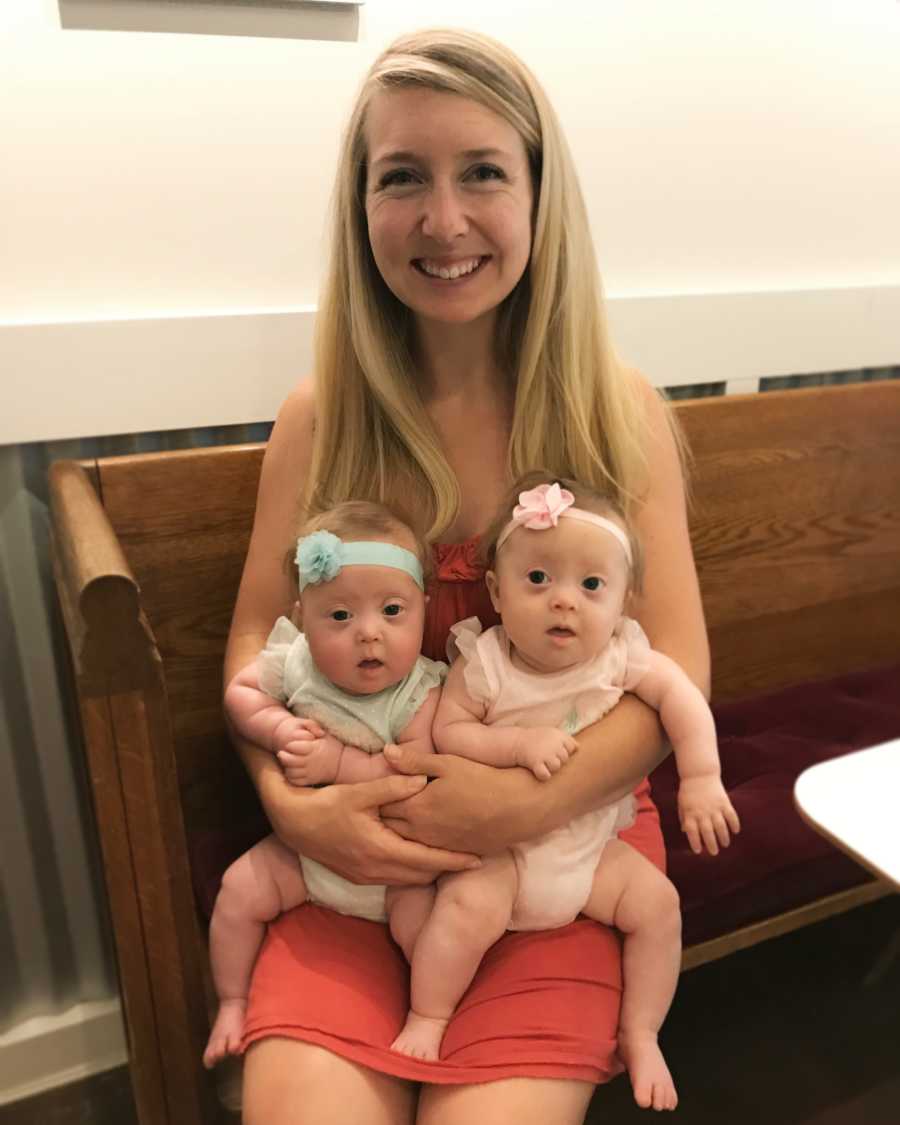
A family that believes in them.
Their mother has often reflected on those early conversations with doctors and the way people reacted when they heard the diagnosis.
She understands that many people speak from fear.
They imagine the difficulties before they imagine the possibilities.
They focus on what might be harder instead of what might be beautiful.
But she learned something that changed her perspective forever.
A child’s value is not determined by how easy their life will be.
A person’s worth is not measured by their abilities, achievements, or differences.
Love does not wait for perfection.
Love begins before perfection is even considered.
Charlotte and Annette grew into bright, happy children who showed their family something incredibly important.
Life rarely follows the picture people create in their minds.
Sometimes the moments we fear most become the moments that transform us.
Sometimes the people others underestimate become the ones who teach the greatest lessons.
The world looked at two unborn babies and saw uncertainty.
Their parents looked at them and saw daughters.
That difference changed everything.
Today, when their mother looks at Charlotte and Annette, she does not see the difficult conversations from years earlier.
She sees laughter.
She sees personality.
She sees two unique little people with their own favorite things, their own expressions, their own dreams, and their own place in the family.
She sees the children she fought to meet.
The children she chose before she ever held them.
The children who taught her that courage is not always loud.
Sometimes courage is a quiet decision made inside a hospital room.
Sometimes courage is saying yes when the world expects you to say no.
Sometimes courage is looking at the unknown and saying:
“I will love you anyway.”
The story of Charlotte and Annette is not a story about proving anyone wrong.
It is not about criticizing parents facing difficult decisions.
Every family faces personal circumstances, fears, and choices that deserve compassion.
Instead, their story is about something much simpler and much more universal.
It is about seeing a human being before seeing a label.
It is about recognizing that every life carries possibilities that cannot always be predicted by a medical report.
It is about the extraordinary power of acceptance.
Because before Charlotte and Annette ever took their first breath, they had already changed the people around them.
They changed their parents.
They changed the way their family viewed challenges.
They changed the way many people understood what happiness can look like.
Their lives became a reminder that some of the most beautiful stories begin in moments that initially feel frightening.
A diagnosis can describe a condition.
It cannot describe a person.
A medical chart can explain a chromosome.
It cannot explain a smile.
A doctor can discuss risks.
But no one can predict the amount of love a child will bring into the world.
Years after that first difficult appointment, their mother still remembers the emotions of that day.
The questions.
The uncertainty.
The feeling that others were expecting heartbreak.
But if she could return to that moment, knowing everything she knows now, she says she would make the same choice again.
Without hesitation.
Without fear.
She would choose Charlotte.
She would choose Annette.
Exactly as they are.
Because the greatest surprises in life are sometimes the ones we were once told to fear.
And sometimes the smallest voices teach the biggest lessons.
Two little girls entered the world carrying an extra chromosome.
But they also carried something far more powerful.
They carried love.
And from the moment their mother first welcomed them, they proved that love was always enough.
