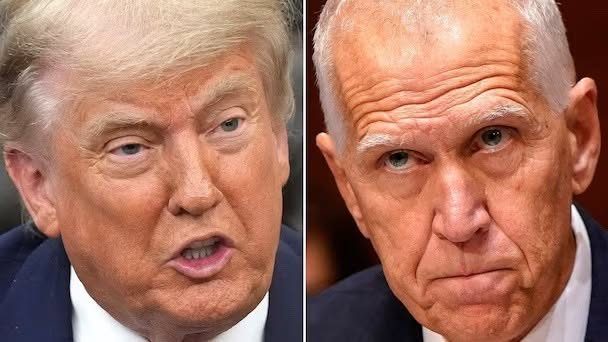
For years, one political reality has dominated Washington: challenging Donald Trump from inside the Republican Party has been one of the most difficult decisions any conservative lawmaker could make.
Since entering the political spotlight, Trump has reshaped the Republican Party around his leadership, his message, and his movement. Many elected officials who once criticized him eventually softened their positions, changed their tone, or chose silence rather than confront the former president and his millions of loyal supporters.
But now, one Republican senator has done something increasingly rare in today’s political environment.
He openly pushed back.
Senator Thom Tillis of North Carolina delivered a direct challenge to Trump’s defense of January 6 defendants, rejecting the argument that individuals involved in violence at the U.S. Capitol should be portrayed as heroes or victims of government persecution.
The statement immediately created a political firestorm because it came from within Trump’s own party — not from Democrats, not from outside critics, but from a Republican senator who has spent years operating inside the conservative movement.
Campaigns & Elections
And the timing made the confrontation even more significant.
The dispute erupted over Trump’s controversial proposal involving what critics have described as an “Anti-Weaponization Fund,” an initiative that supporters say would help people who were unfairly targeted by the government, but opponents warn could become financial support for individuals convicted of crimes connected to the January 6 Capitol attack.
Trump defended the idea forcefully, arguing that many January 6 defendants had been treated unfairly and describing them as people who had been “hunted down” by the government.
But Tillis rejected that characterization.
He argued that those who assaulted police officers, damaged the Capitol, and participated in violent actions should not be celebrated as victims or rewarded with taxpayer money.
State & Local Government
A Republican senator was telling the Republican president that he had crossed a line.
And in a party where loyalty to Trump has often become a defining political test, that decision carried enormous consequences.
The Moment a Republican Senator Refused to Follow the Script
The modern Republican Party has experienced years of internal debate over how closely lawmakers should align themselves with Trump.
For some Republicans, Trump represents the voice of millions of conservative voters who believe he challenged Washington’s political establishment and fought against institutions they distrust.
For others, particularly some longtime conservatives and elected officials, there has been growing concern about what happens when political loyalty begins to outweigh traditional principles such as limited government, law enforcement support, and respect for democratic institutions.
The January 6 debate sits directly at the center of that conflict.
When Tillis criticized Trump’s defense of the defendants, he was not simply disagreeing over a policy proposal.
He was challenging the broader narrative surrounding one of the most controversial days in modern American history.
His argument was straightforward: political beliefs cannot erase criminal actions.
Someone can support a political movement, he argued, but that does not excuse attacking police officers or breaking the law.
That position placed Tillis in a complicated position.
On one hand, Republicans have long emphasized support for law enforcement and public safety.
On the other hand, criticizing Trump on January 6 has often carried political risks among Republican voters who view the prosecutions through a very different lens.
By speaking publicly, Tillis stepped directly into one of the most sensitive battles inside the GOP.
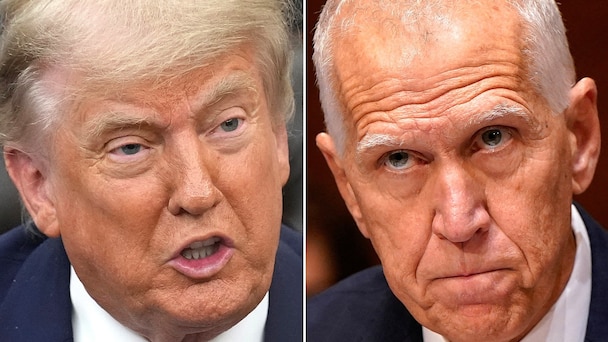
The Fight Over January 6 Has Never Really Ended
More than years after the Capitol attack, Americans remain deeply divided over what January 6 represented.
Politics
For many Americans, the images from that day remain unforgettable.
The sight of crowds entering the Capitol, lawmakers being evacuated, windows being broken, and police officers struggling to regain control shocked the nation.
The attack interrupted one of the most important constitutional processes in the country: the certification of the presidential election results.
Thousands of people were later investigated, and many faced criminal charges.
But the political interpretation of those events has remained fiercely contested.
Supporters of Trump argue that some defendants received excessive punishment and that the justice system treated them differently because of their political beliefs.
Campaigns & Elections
They argue that government agencies have been politically motivated and that individuals deserve legal support when they believe they were unfairly targeted.
Critics argue that the issue is much simpler: people who commit violence, especially against police officers, must face consequences regardless of their political affiliation.
That disagreement has created one of the largest political divides in America.
And now it has moved directly into a fight between a Republican senator and the leader of his own party.
Trump’s Defense Created a New Political Problem
One of the most interesting parts of the dispute was that Tillis argued Trump’s own words strengthened the case against the fund.
State & Local Government
Before Trump publicly defended the proposal, some Republican lawmakers had suggested that the initiative was no longer an active issue.
But when Trump openly supported it, Tillis argued that it confirmed their concerns.
In other words, Trump’s attempt to defend the plan may have unintentionally provided additional ammunition to those trying to stop it.
Executive Branch
The political calculation changed immediately.
Instead of debating whether the fund existed or whether it remained a serious possibility, lawmakers were now forced to confront Trump’s own public endorsement.
For Tillis and others who opposed the proposal, that became evidence that action was still necessary.
Public Speaking
The controversy also revealed a deeper disagreement over who controls the direction of the Republican Party.
Is it elected officials in Congress?
Is it grassroots voters?
Violence & Abuse
Or is it Trump himself?
That question has shaped Republican politics for nearly a decade.
A Rare Example of Republican Resistance
Political analysts have repeatedly noted how unusual it has become for Republican lawmakers to directly challenge Trump.
During his presidency and afterward, many Republicans who once criticized him eventually adjusted their positions.
Some did so because they believed Trump remained the most influential figure in conservative politics.
Politics
Others recognized that millions of Republican voters continued to support him and that openly opposing him could create significant political consequences.
That reality makes moments like Tillis’s statement stand out.
Regardless of whether people agree with him, the political significance comes from the fact that he chose confrontation instead of silence.
He did not simply offer a vague statement about “moving forward.”
He directly rejected the idea that those who attacked police officers should be portrayed as patriotic victims.
That distinction matters.
Campaigns & Elections
In politics, language often reveals more than policy.
The words politicians choose show what they are willing to defend — and what they are willing to challenge.
The Republican Party’s Identity Crisis
The disagreement between Trump and Tillis reflects a much larger struggle inside the Republican Party.
State & Local Government
For decades, Republicans built their identity around ideas such as limited government, national security, strong law enforcement, and traditional institutions.
Trump transformed many aspects of that identity.
His movement placed greater emphasis on challenging established institutions, fighting what supporters describe as a corrupt political system, and rejecting mainstream media and government agencies.
Millions of voters embraced that message.
But the transformation also created internal tensions.
Some Republicans worry that abandoning traditional principles could damage the party’s long-term future.
Public Speaking
Others believe Trump’s approach represents exactly the kind of disruption necessary to challenge a system they believe has failed ordinary Americans.
The January 6 debate has become a symbol of that larger conflict.
It is not only about one group of defendants.
It is about how Republicans define patriotism, accountability, and loyalty.
The Law Enforcement Question That Complicates Everything
Perhaps the most politically difficult aspect of the debate is the role of police officers.
Executive Branch
Republicans have traditionally positioned themselves as the party of law enforcement.
Supporting police departments, strengthening criminal penalties, and emphasizing public safety have long been central themes in conservative politics.
That history makes January 6 uniquely complicated.
When people who identify with a conservative movement are accused of attacking police officers, it creates a direct conflict between political loyalty and traditional Republican messaging.
Tillis’s argument focused heavily on that contradiction.
His position was that supporting law enforcement must apply consistently.
Politics
A person’s political beliefs should not determine whether attacking an officer is considered acceptable.
That argument appealed to Republicans who believe accountability should remain a core conservative value.
But it also angered Trump supporters who believe January 6 defendants have been unfairly treated.

A Political Battle That Could Shape the Future of the GOP
The clash between Trump and Tillis may appear to be a disagreement over one fund or one statement.
Campaigns & Elections
But the implications are much larger.
The Republican Party is still wrestling with its future direction.
Will it remain centered around Trump’s political movement?
Will lawmakers increasingly feel comfortable challenging him?
Will voters reward Republicans who break with Trump on certain issues?
Those questions remain unanswered.
But every public disagreement creates another moment where the party must confront its internal divisions.
The Tillis controversy is important because it shows that disagreement within the GOP has not disappeared.
Violence & Abuse
It may simply have been happening behind closed doors.
Now, it is happening in public.
And when political battles move from private conversations into national headlines, they often reveal changes that are already taking place beneath the surface.
The Moment Washington Cannot Ignore
Whether someone views Thom Tillis as courageous or misguided, one fact is undeniable:
A Republican senator publicly challenged Donald Trump on one of the most emotionally charged issues in American politics.
Public Speaking
That alone makes the moment significant.
It shows that the debate over January 6 remains unresolved.
It shows that questions about accountability and political loyalty continue to divide the country.
And it shows that even within Trump’s own party, there are still disagreements about where the line should be drawn.
American politics has always been shaped by moments when individuals decide whether to follow the crowd or stand apart.
Tillis’s decision placed him at the center of one of those moments.
The consequences of that choice may extend far beyond one political fight.
State & Local Government
Because the question facing Republicans is no longer simply about January 6.
It is about the future identity of the party itself.
